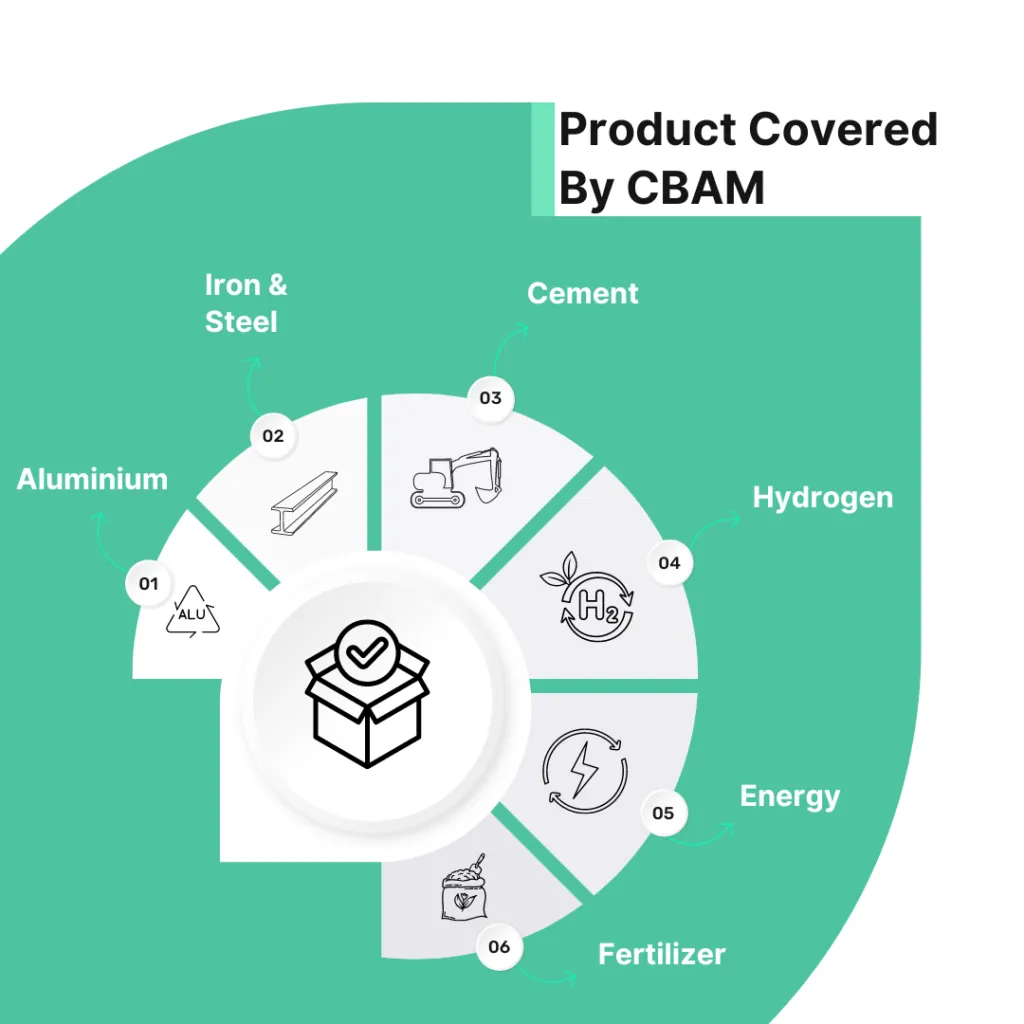
Sectors covered under CBAM as of now
Carbon Border Adjustment Mechanism is the European Union’s initiative to prevent carbon leakage by taxing certain carbon-intensive imports and
protecting the competitiveness of EU industries that are subjected to EU’s emission trading system (ETS)
Why did the EU come up with Carbon Border Adjustment Mechanism?
- Prevent carbon leakage and achieve EU’s climate goal - net zero by 2050.
- Ensuring a level playing field between EU businesses and foreign competitors
- Discourage relocation of companies to evade EU carbon pricing
CBAM certificates
The Carbon Border Adjustment Mechanism system applies to carbon-intensive sectors like steel, cement, aluminum, and electricity, which have a high carbon footprint during production. Importers must estimate and report the carbon emissions associated with their imported goods. Based on these emissions, they are required to purchase CBAM certificates, with costs tied to the EU ETS carbon price. This system ensures imported goods reflect the cost of their embedded carbon, aligning their prices with similar EU-produced goods that already account for their emissions under the ETS.
Our scope of work:
- Define operational boundaries for CBAM compliance, analyze the production process and identify emission sources.
- Collect validate and integrate data as per CBAM template
- Direct and indirect emission calculation by following approved CBAM methods
- Generate quarterly CBAM compliance report (XLMS file)
- Support through the ongoing transition period
Why choose Ekobon?
At Ekobon, we provide seamless CBAM compliance with comprehensive data management using CBAM-approved methods and calculations. Our accurate emissions tracking helps you optimize processes, reducing embodied carbon and potentially lowering CBAM fees. We also offer full support throughout the transition period, ensuring you stay compliant as regulations evolve. With Ekobon, manage everything in one place—from calculations to reporting—streamlining your CBAM process for better efficiency and cost savings.
FAQs

- Importers of 6 sectors (EU based): They need to scrutinize the supply chain and must ensure supplier transparency on carbon emissions to minimize CBAM costs on final products.
- Exporters (Non-EU based): They will feel pressure to decarbonize as well as to invest in systems to track and verify the carbon footprint of their products.
- For all other EU businesses: CBAM can lessen the competitive threat for them.
- Encouraging greener production
- Ensuring fair competition
- Driving global climate action