LCA is the science-based method used to evaluate the environmental impact of a product or process throughout its entire life cycle. Throughout an LCA, all stages of a product's life cycle are accounted for, encompassing resource consumption, material processing, product fabrication, distribution, utilization, and even disposal at the end of its life.
Why is LCA needed?
An LCA can be used to identify so-called “hotspots” in the life cycle indicating where the company or its suppliers can adapt their processes to decrease their environmental impact.
An LCA can thus be used for learning about your own supply chain and its impact and for informed decision making to reduce your environmental impact.
Life Cycle Assessment with Ekobon
01
Assess any material
Evaluate materials like glass, plastic, metals, fabrics and more. Suggest alternatives with lower carbon footprints, high recyclability, and reduced toxicity
02
Zoom into hotspots
Analyse the value chain for the environmental impact. Identify the major contributors to your impact and make necessary changes
03
Multi-level Insights
Get detailed insight of the environmental impact of supply chain, company processes and products
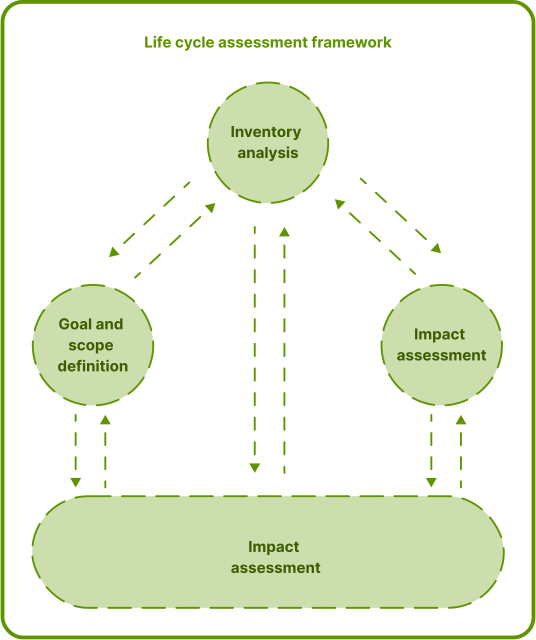
There are several ways an LCA can be undertaken: Cradle-to-gate, Cradle-to-grave, Cradle-to-cradle. The method is standardized and guided by ISO 14044:2006, which makes the results comparable globally and across products. According to the standard, an LCA should consist of the following stages:
An EPD is a verified report based on LCA, providing transparent, fact-based environmental data to support sustainability efforts and product differentiation.
Benefits of EPDs?
-
Provides verified, clear environmental data based on a product's life cycle
-
Supports sustainable decision-making and increases trust when exporting products by offering credible, internationally recognized environmental information
-
EPD can earn credits for systems like LEED v4 and other green building certifications
-
Fulfills Product Category Rules (PCR) and adheres to international standards like ISO 14044, ISO 14025, and ISO 21930
-
Strengthens brand value and consumer trust through sustainability leadership
How Ekobon can you help you with LCA assessment and EDP
-
Setting goal and scope: We follow the ISO 14040 standard for LCA, using both 'cradle to gate' and 'cradle to grave' system boundary approaches, depending on your needs
-
Collecting data for a life cycle inventory
-
Assessing the environmental impact based on the data
-
Data interpretation
-
Preparation of LCA report as well as EPD report